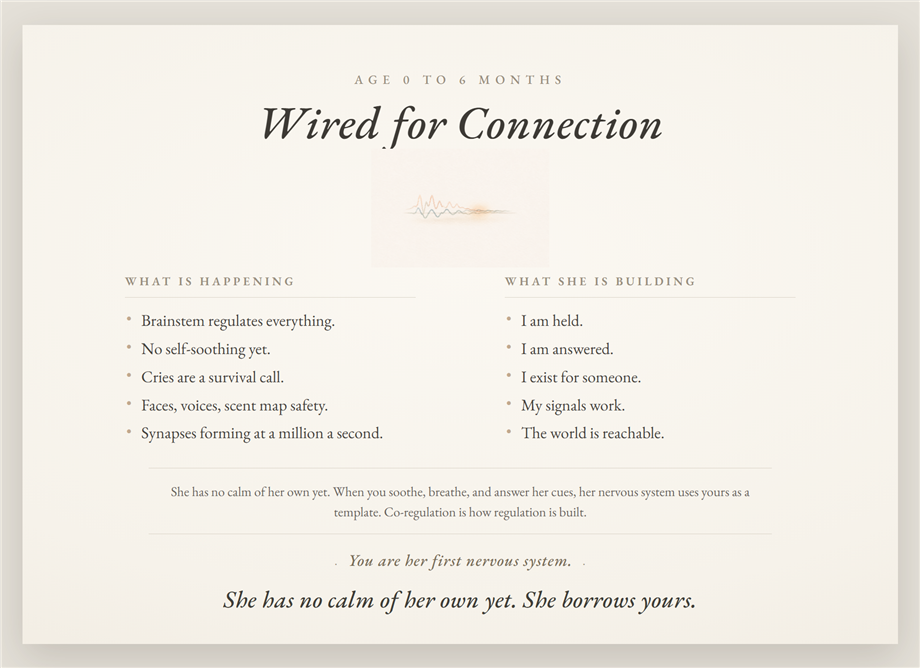
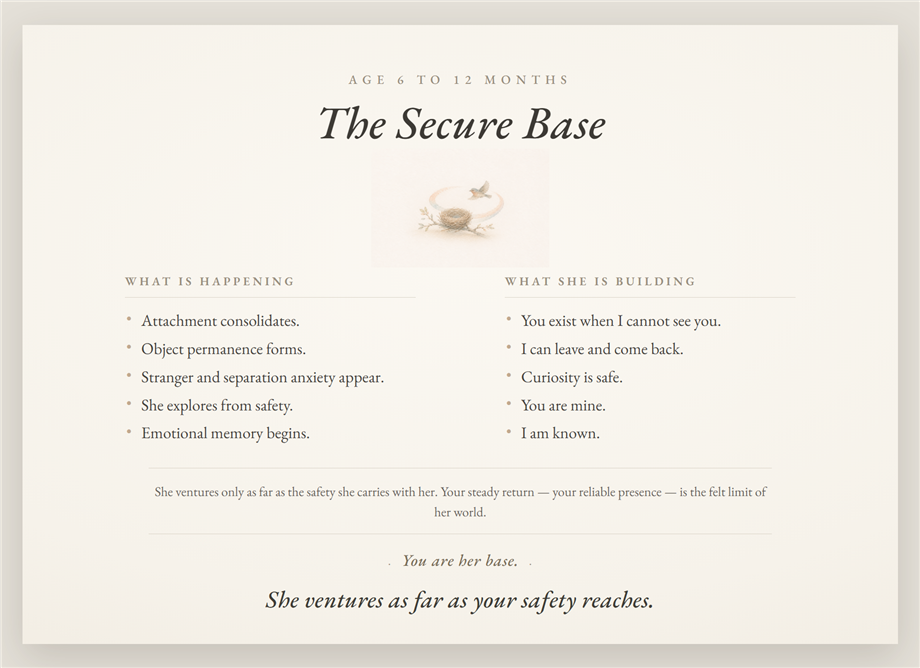
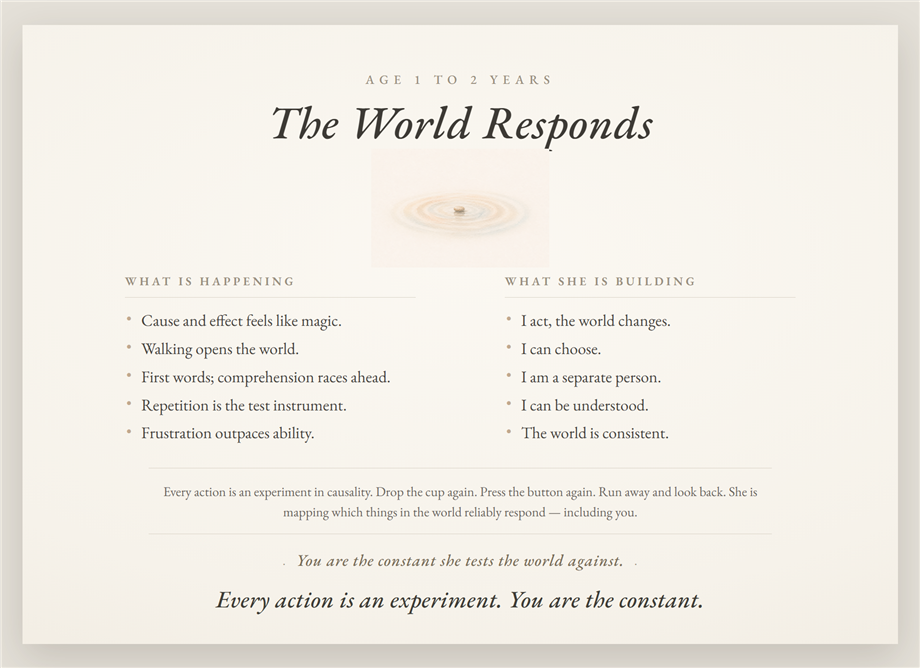
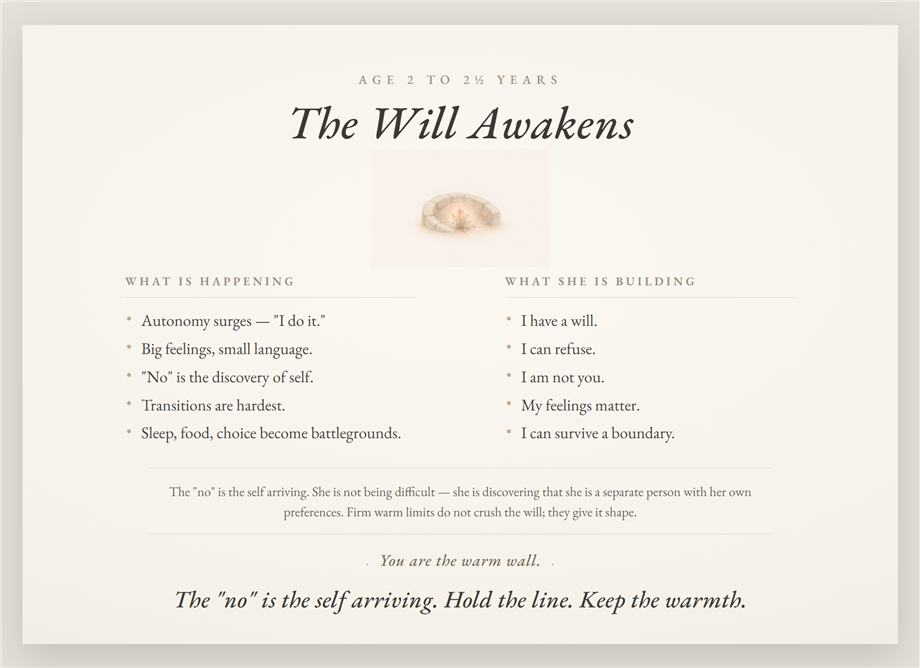
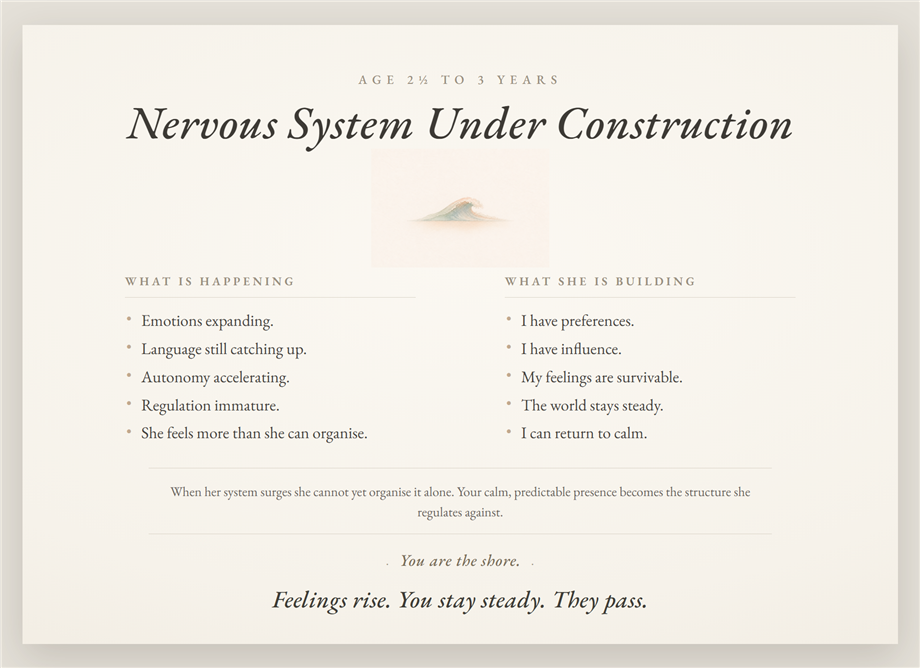
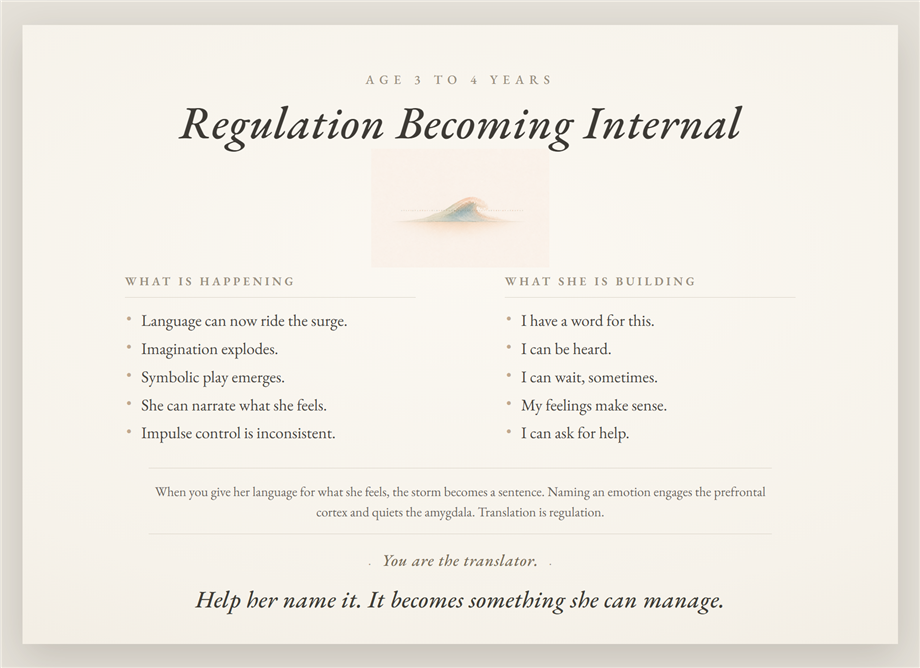
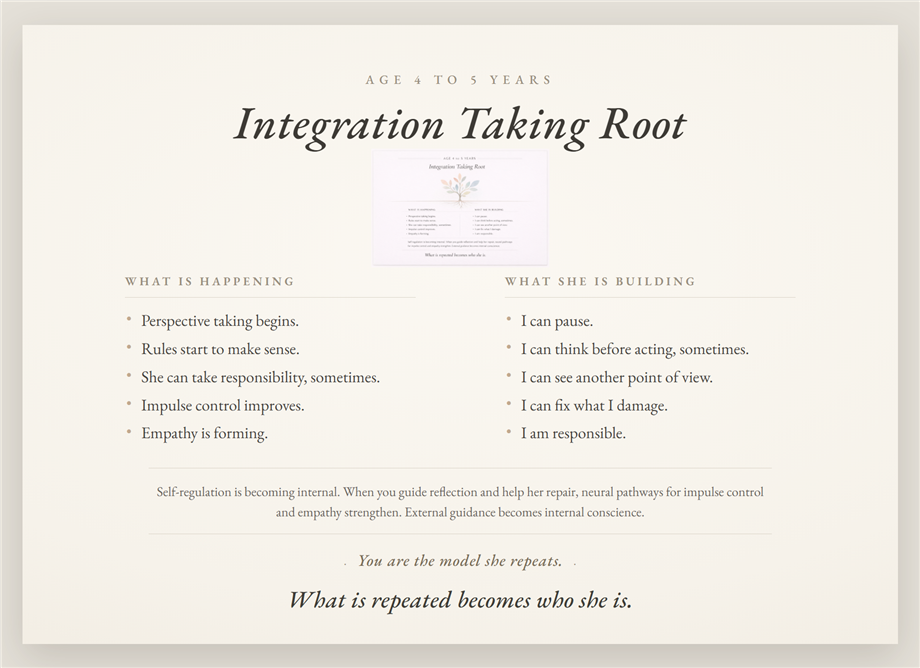
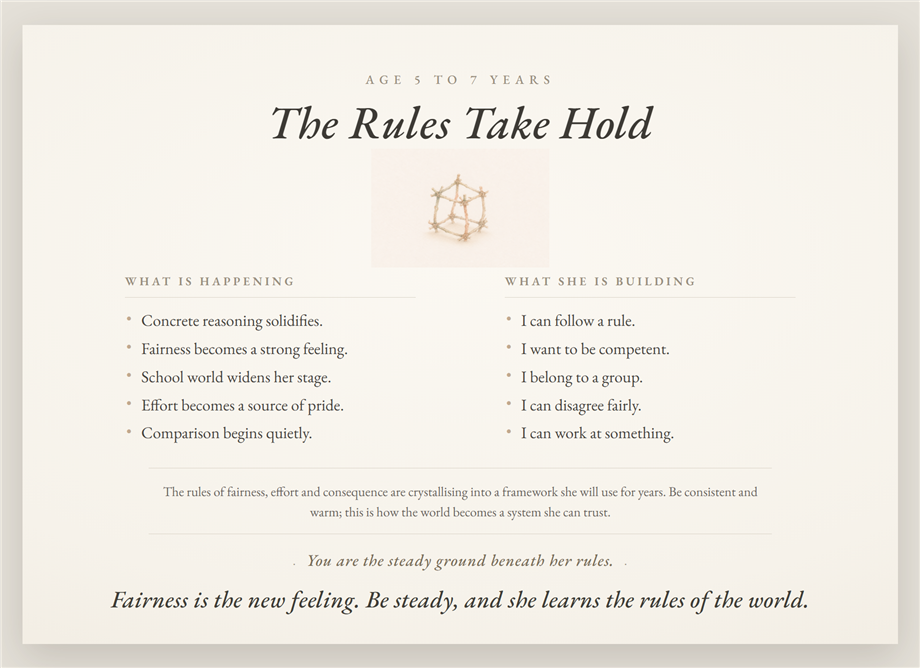
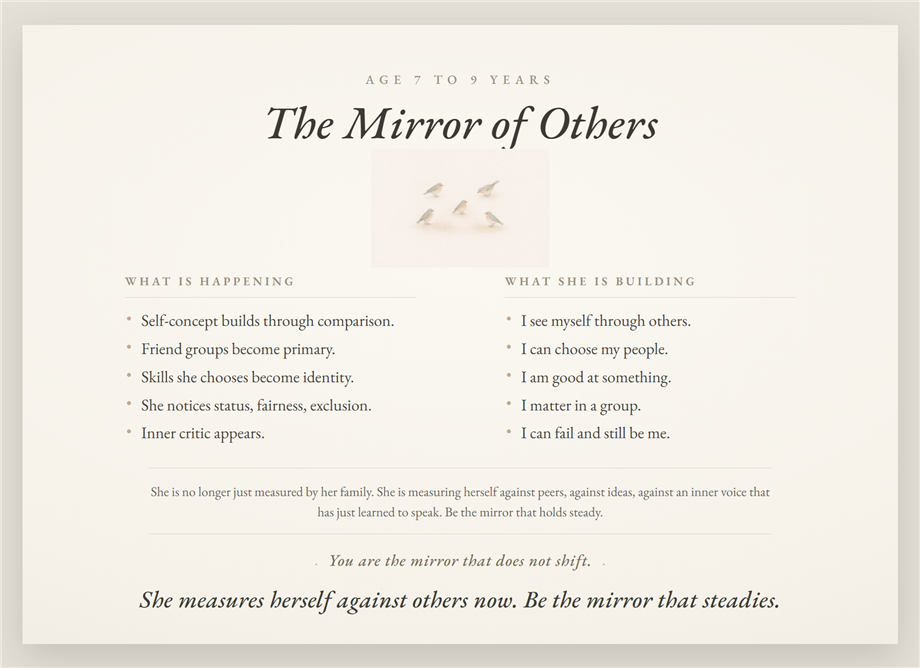
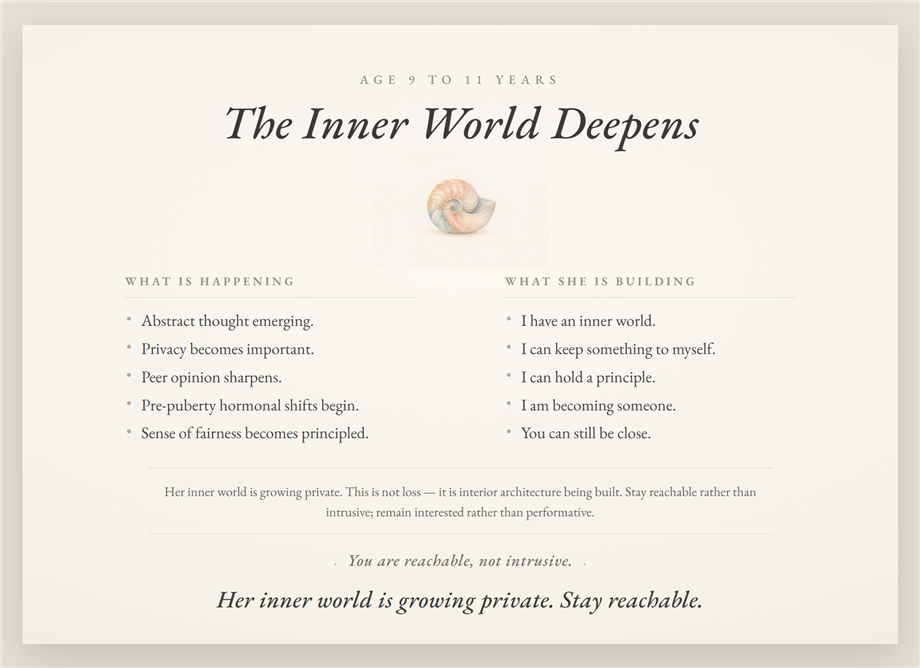
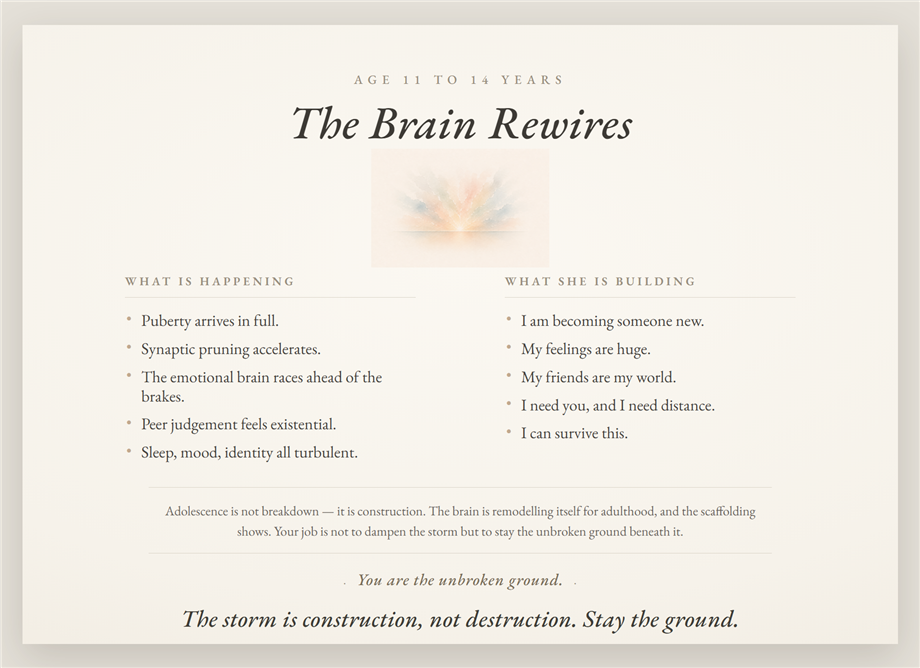
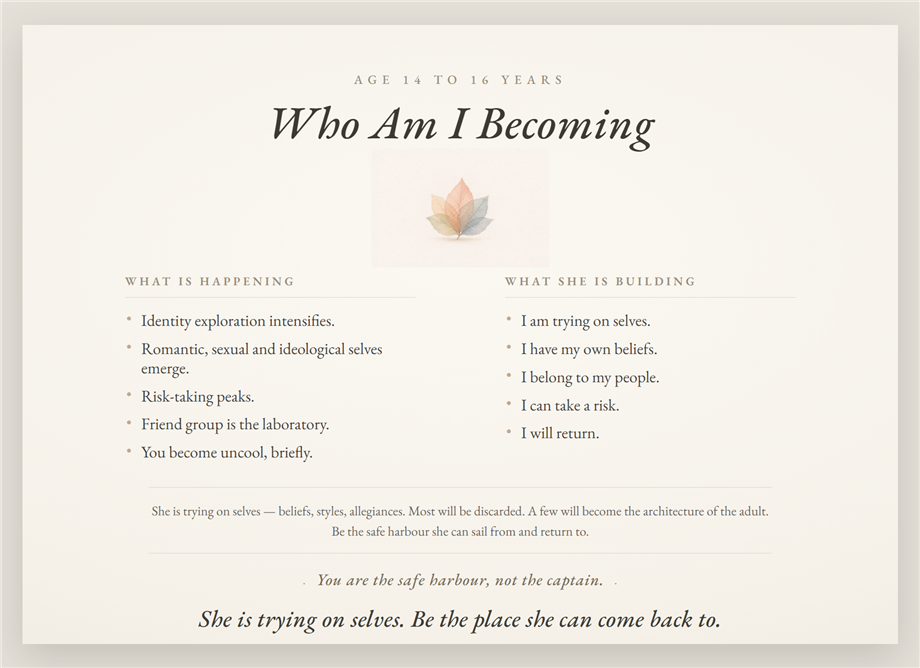
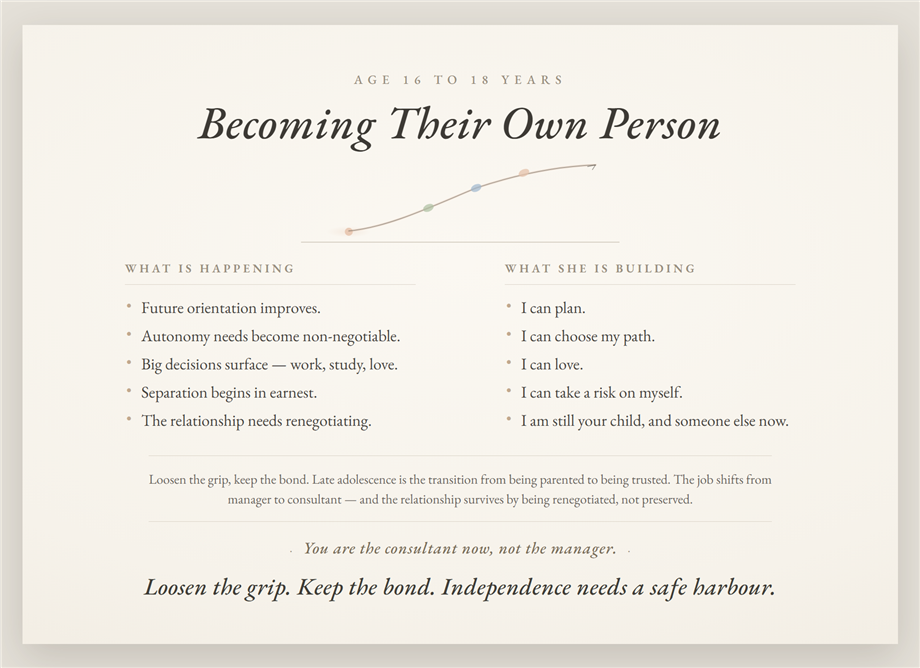
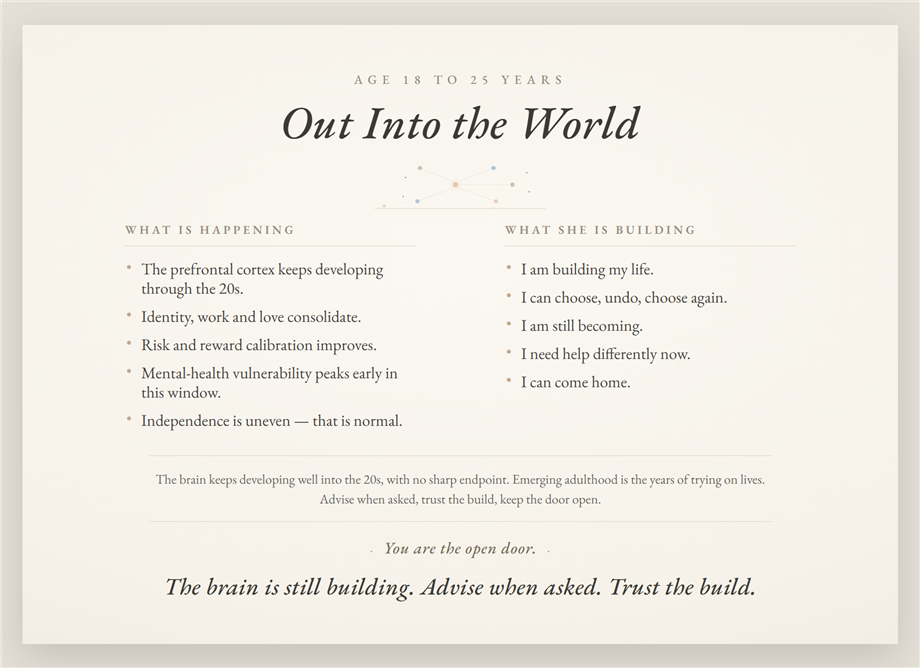
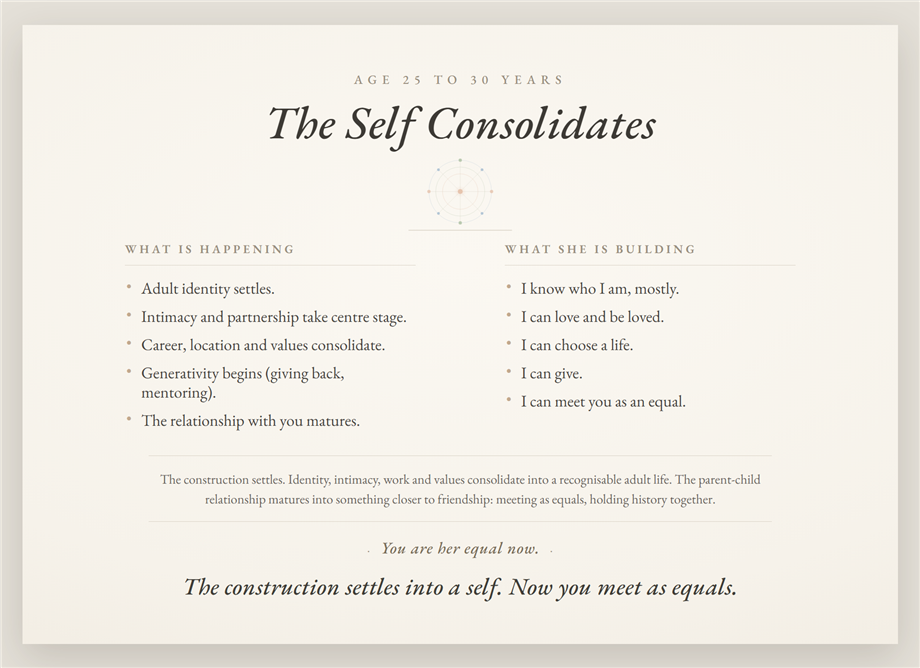
Calm, evidence-based wall posters mapping the whole arc of becoming — from birth to maturity. One for every stage, so you can meet your child exactly where they are.
Each poster names what's happening inside your child now, why, and how to meet it. The back carries the science and the things you'll actually face. Made to live on a wall in a real home, not in a brochure.
Grounded in researchDevelopmental psychology and neuroscience, distilled.
Made to be lived withA3 fine art print on Hahnemühle 310 gsm paper. Two-sided.
Printed to orderNo warehouse, no waste, shipped worldwide.
Most parenting advice arrives too soon, too late, or in the wrong shape. You don't need a book on toddler tantrums when you're trying to get a 3-year-old into a coat. You need the right thing at the right moment, in the right form.
Considered Parenting is fifteen posters, one for each developmental stage from birth to maturity. Each one tells you, calmly and on one page, what's happening inside your child now, what they're building, and what you can do.
The back carries the science the front rests on — and the specific things parents face at this stage, with concrete handling. So you understand why it says what it says, and you have something to read when the wave passes.
A map you can read in two directions — forward, to meet your child; back, to recognise where you've been.
Why birth to thirty
Development doesn't stop at the school gate
Or at eighteen. The brain keeps building the circuitry for regulation and judgment well into the mid-twenties — and there's no single day it's finished. Maturity arrives as a gradient, not a deadline.
So the series maps the whole arc, birth to maturity. You buy the stage you're in, and the poster meets your child where they actually are — at three, at thirteen, at twenty-three. Buy a single stage, the band you're living through, or the full arc as a growing-up library.
The Developmental Series
Fifteen stages, birth to maturity
Grouped into four bands. Buy a single stage, the band you're in, or the whole arc.
Early ChildhoodBirth – 5 years
The architecture goes in: attachment, the first regulation, the earliest sense of self.
A3 landscape — 297 × 420 mm (about 11.7 × 16.5 inches). Designed to live alongside a framed photo or above a small piece of furniture without dominating the room.
Are they really two-sided?
Yes. The front is the regulation object — for a glance in a hard moment. The back is the parent's handbook — the science, and the specific things you'll face. Frame whichever side you want forward; some parents rotate them as their child enters the next stage.
Why does the range go all the way to thirty?
Because development does. The brain keeps building its regulation and judgment circuitry into the mid-twenties, and identity keeps consolidating well beyond eighteen. The later posters meet the older child, the leaving-home young adult — and, quietly, the grown reader who recognises a stage they're still living through.
Can I buy a single stage — or a bundle?
Both. Pick the single age you're in. Or buy the band you're living through — Early Childhood, Middle Childhood, Adolescence, or Emerging Adulthood — so you have the whole stretch on the wall. Or buy the full set of fifteen as a growing-up library.
Who are they for?
Parents, grandparents, carers, teachers, therapists — anyone who lives or works with a developing human. And, gently, for the adult who wants to understand the arc they came up: where they've been, and which stages they might still be meeting in themselves.
Is this medical or therapeutic advice?
No. Considered Parenting is developmental reference grounded in published science. It is not a diagnosis, a treatment plan, therapy, or a substitute for clinical advice. If you are worried about a child's — or your own — development, mood, or safety, please talk to a qualified professional.
When will I receive my order?
Printed to order in 2–4 working days, then shipped. UK delivery: 3–5 working days from print. International: 7–14 working days from print. Free UK shipping on orders over £50.